What's up
NavAuWall, exploring the future of automated inland navigation

September 17, 2026 - Four years of research, technology development and regulatory work came together at A6K in Charleroi, as the NavAuWall project reached the end of its research phase.
Coordinated by Belgian company Seafar, the project brought together Multitel, DN&T, Versus and the University of Liège, with the support of the Walloon Public Service (SPW) and Logistics in Wallonia. Launched in October 2022 for a 48-month period, the project's shared objective was ambitious. Could inland waterways in Wallonia become suitable for remotely operated and increasingly automated navigation?
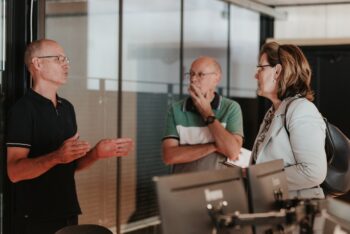
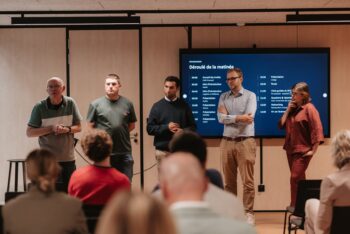
The closing event brought the consortium together with public authorities and stakeholders from the port, logistics and industrial sectors to take stock of the results and discuss the next steps.
Bringing technology and regulation onto the same waterway
Automated navigation goes beyond the technological challenge.
For vessels to operate safely with less human intervention, technologies such as communications, autonomous systems and artificial intelligence need to work alongside infrastructure, operational procedures and an appropriate regulatory framework.
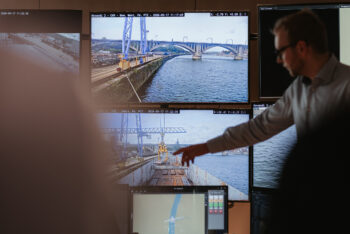
The project also responds to a pressing industry issue, the growing shortage of qualified crew, particularly skippers, driven by the demanding nature of life aboard a vessel. Remote and automated navigation offers a way to make the profession more attractive, allowing operators to work from a control center rather than living aboard for extended periods.
NavAuWall brought these different dimensions together. The consortium investigated the technical feasibility of remotely operated inland navigation on Walloon waterways while also examining the regulatory developments required to support it.
Research conducted by the University of Liège contributed to the first international definition of automation levels in inland navigation, in collaboration with the Central Commission for the Navigation of the Rhine (CCNR) and the European Committee for drawing up Standards in Inland Navigation (CESNI).
A recommendations report and roadmap were delivered to the SPW to support the evolution of the Walloon regulatory framework. The project's results were also presented internationally at Smart Rivers 2025 in Memphis, United States, with a publication by the PIANC INCOM WG262 working group expected in 2027.
From remote operation to automated navigation
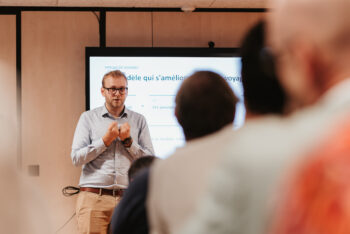
The closing event gave each project partner the opportunity to present the results of its work.
Seafar presented the main achievements of the project and its developments in remote and intelligent navigation.
Versus shared the results of trials conducted aboard the Novandi II, as well as perspectives for taking the work further.
Multitel presented its research into networks and communications, essential components for remotely operated and automated vessels.
DN&T detailed the design process of the autonomous vessel developed within the project, from the initial specifications through to the detailed plans.
The University of Liège presented its work on automated lock passage and docking, alongside its analysis of the regulatory changes needed to support automated inland navigation.
Together, these contributions highlighted the multidisciplinary nature of the challenge. Moving toward more automated waterways requires advances across several technological and operational layers, with each partner bringing a different piece of the puzzle.
What's next?
The project is now entering its administrative closing phase, with the final deliverables expected by the end of October 2026.
The regulatory recommendations will continue to be followed up with the SPW and European sector bodies, while trials will continue in Wallonia through collaboration between SPW, Versus and Seafar.
Research and development around artificial intelligence will also continue, supporting further work on automated navigation.
Connecting the pieces of industrial innovation
The event brought together the NavAuWall consortium, representatives of Belgian, Dutch and French public authorities responsible for waterways, as well as stakeholders from the port, logistics and industrial sectors active across Walloon and international waterways.
That mix of expertise reflects the reality of projects like NavAuWall. Automated navigation brings together mobility, industrial technology, digital infrastructure, logistics and public policy. Moving these technologies forward requires close collaboration between the organizations working across each of these fields.
This is also what makes A6K a natural meeting point for projects at the intersection of technology and industry, bringing together companies from different industrial and technological fields, research organizations and academic institutions under one roof.
NavAuWall shows what can emerge when these different areas of expertise come together around a shared industrial challenge, from the first research questions to real-world testing and the regulatory framework needed to support future applications.