What's up
Meet Lyra & Hyperion, powering AI and HPC

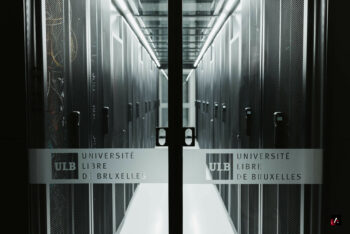
We are excited to announce the arrival of a unique shared equipment, ULB’s Data Center! This modern facility provides secure, scalable, and high-performance hosting for ULB’s institutional IT systems and research computing infrastructure and is now made available to innovate, accelerate & learn.
“Co-funded by the Walloon Region to the amount of €1.7 million, ULB’s new data center hosts both the University’s information systems and a supercomputer specifically dedicated to artificial intelligence”, explains Annemie Schaus, Rector of ULB. “Built primarily on open-source technologies, it represents a major advancement in terms of digital sovereignty, both for the University and for academic research. Thanks to CECI, the consortium for high-performance computing equipment, all universities of the Wallonia–Brussels Federation can now run artificial intelligence and big data models on this ULB-led infrastructure. This opens up new research perspectives across all disciplines, from the humanities and social sciences to the exact sciences, and of course health sciences.”
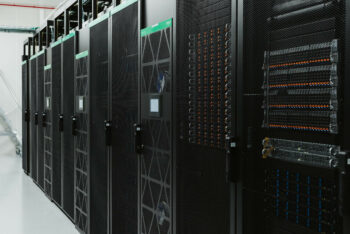
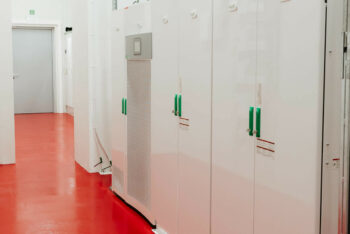
The new computing facility (DC A6K) consists of 18 large-scale IT racks, enabling the hosting of ULB’s equipment as well as that of its partners. Belnet, the Internet service provider for Belgian public institutions, has also installed a point of presence within DC A6K, further strengthening the coverage of its national network in the Charleroi region.
As the former data center dated back to the 1970s, reinvesting in a modern and sustainable infrastructure had become essential. The new computing facility hosted at A6K now houses two flagship platforms: Lyra, the CECI-ULB supercomputer, specialized in AI-based scientific computing, and the Hyperion IT platform, which centralizes ULB research data, custom-designed computing environments, and essential university services such as the institutional website.
Lyra, the AI-powered supercomputer for research
Among the IT infrastructure hosted at DC A6K is the latest generation of the CECI-ULB supercomputer, named Lyra, which is specialized in artificial intelligence–based scientific computing.
Researchers can efficiently store and process large volumes of data on Lyra and build models using machine learning, deep learning and neural network techniques. These models are then applied to datasets to detect patterns or make predictions. The range of applications is extensive, including medical diagnostics based on patient cell or tissue imaging, identification of promising molecules for the development of new medicines, protein structure modeling, the design of new materials, large-scale weather forecasting, the development of autonomous robots, and more.
Lyra is a Tier-2 supercomputer featuring 23 compute nodes and 46 graphics processing units (GPUs). It provides researchers with computing power well suited to a wide range of AI-driven research projects. One of Lyra’s distinctive features is the use of virtualized compute nodes without any loss of performance. By deploying virtual machines on physical compute servers, the system offers exceptional agility and long-term scalability, allowing computing resources to be rapidly reallocated in response to the evolving needs of the scientific community.
The new Lyra supercomputer is interconnected with other supercomputers at universities within the Wallonia-Brussels Federation and is accessible to all researchers from French-speaking Belgian universities who are members of CECI (the Consortium for High-Performance Computing Equipment). Lyra also serves as a stepping stone for scientists wishing to run larger-scale computations on Lucia, the Walloon Tier-1 supercomputer operated by Cenaero, which is located adjacent to the DC A6K.
Hyperion, the secure, scalable and sovereign institutional hosting platform
ULB’s IT Department has also deployed an IT platform called Hyperion, which hosts ULB research data, custom-designed computing environments for laboratories, as well as central ULB environments such as the University’s public website, its intranet and its SAP platform. The implementation of Hyperion has made it possible to develop a portfolio of services accessible to the ULB community, simplifying and facilitating access to IT resources. Hyperion also offers a high level of adaptability, enabling it to evolve in line with the needs of ULB researchers, academic staff and administrative services.
“We have built an IT infrastructure inspired by hyperscaler practices, such as those used in Amazon, Google or Microsoft Azure data centers, while maintaining a human-scale approach and academic governance. The key concept here is Infrastructure-as-code. This vision requires the deployment of distributed, virtualized software solutions that are fully automated in their management. This approach ensures a high level of agility and adaptability. Today, for example, we are able to deploy and redeploy the Lyra supercomputer with a single command in less than eight hours” explains Raphaël Leplae, Director of the Technology Division, ULB IT Department.
The strategy pursued by the IT teams integrates the use of non-proprietary hardware and open-source solutions across all IT layers. This approach provides a high degree of flexibility in technology choices and much greater scalability. The solutions implemented also ensure full data sovereignty and control over the IT services hosted within the Data Center.
A platform designed with carbon footprint reduction in mind
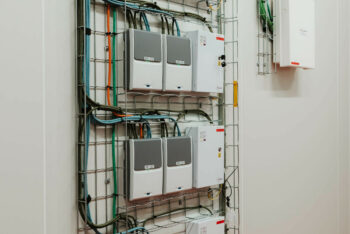
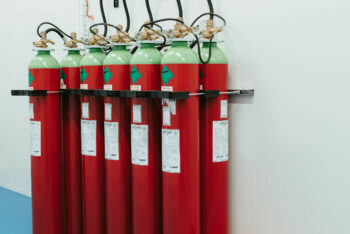
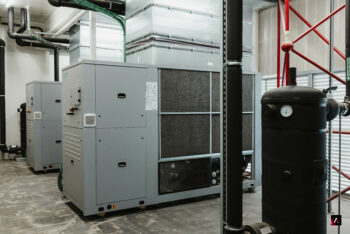
The Data Center provides a modern, secure and resilient hosting environment for ULB’s IT infrastructure, including protection against short- and long-term power outages, redundant cooling systems, fire detection and suppression, monitoring systems, and strict access control.
Its construction is part of ULB’s policy to reduce its carbon footprint as much as possible. Thanks to high energy efficiency, with a Power Usage Effectiveness (PUE) of 1.2, the data center minimizes energy losses. In addition, from 2026 onwards, the heat generated by the IT equipment will be recovered to heat the offices of the A6K building.