What's up
Five thematics, one community around the same table

Innovation rarely respects the borders of a thematic. Over the past months, we told the stories of Industrial Performance, Digital & Intelligent, Energy & Power, Security & Safety and Connected & Autonomous one at a time, but on our campus they have never lived apart.
The people behind them share the same corridors, the same labs and often the same coffee machine. Their projects cross the lines we drew on paper far more often than they stay inside them, and that is exactly where things get interesting.
When thematics overlap
Take a drone that inspects an industrial site. It flies on its own, it carries sensors and runs AI on board, it must never be taken over or fall on anyone, and its batteries and power electronics decide how long it stays in the air. That is four thematics in one machine, and the data it brings back only matters if a plant can act on it.
That is why our thematics are a map rather than a set of boxes. They help us read who knows what, and the most promising work starts where two of them meet.
The infrastructures tell the same story. The 5G lab, the supercomputer and the demonstrators on our campus were never built for one thematic. Each of them serves whoever brings the right question.
Getting the right people together
Good projects rarely come out of a document. They come from a conversation between someone who has a problem and someone who has already solved half of it, often without knowing the other one existed.
That is why we bring our members together on a regular basis. Every month, our project steering committee gives the floor to one member, who explains what they work on and what they are looking for, and the questions that follow are often more useful than the presentation itself.
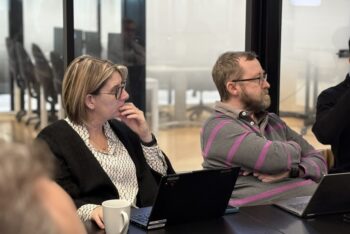
Some meetings are small, one member and a few neighbors. Others gather the whole community around a single theme. None of this is complicated. It simply takes someone to set the table and to make sure the right people sit around it.
Joining forces on European projects
European funding is the clearest example. Calls reward complementary consortia, competition keeps rising, and the real work starts months before any deadline, with partners who already trust each other.
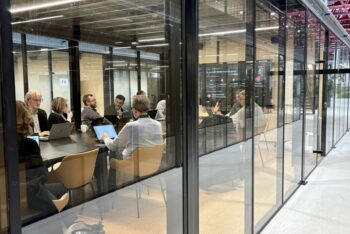
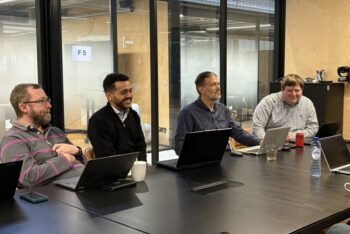
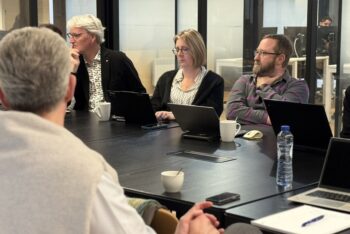
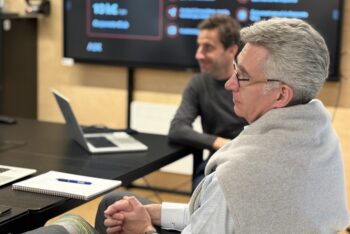
In October 2026, we gathered our community around one question, how do we become a stronger candidate together? External guests who work with European programs every day joined the discussion, not to list calls, but to help us look at ourselves as an ecosystem.
What do we bring when we stand together, and what is still missing to lead or join the next consortium? The answers will take shape over the coming months. The conviction is already there. Nobody wins a European project alone, and a community that knows itself has a head start.
Setting the table, then stepping back
Our role sits between the thematics. We listen first, then connect a need with the expertise, the infrastructure or the partner that can answer it, and we step back once the project runs on its own.
Some of those connections lead to a European proposal. Others become a test on one of our demonstrators, a student project, or simply a coffee that saves months of work.
One sensor looking for a network. One plant looking for a test bed. One consortium still missing its partner. Tell us what you need, and we will find who belongs around the table.
Working on a project that crosses thematics? Connect with our community and make it happen!